Franchise development teams measure almost everything.
They track leads. They monitor qualification calls. They know who completes an application, who attends Discovery Day, and ultimately who signs a franchise agreement.
But there is one critical point in the franchise sales process where visibility often disappears: the moment the Franchise Disclosure Document is sent.
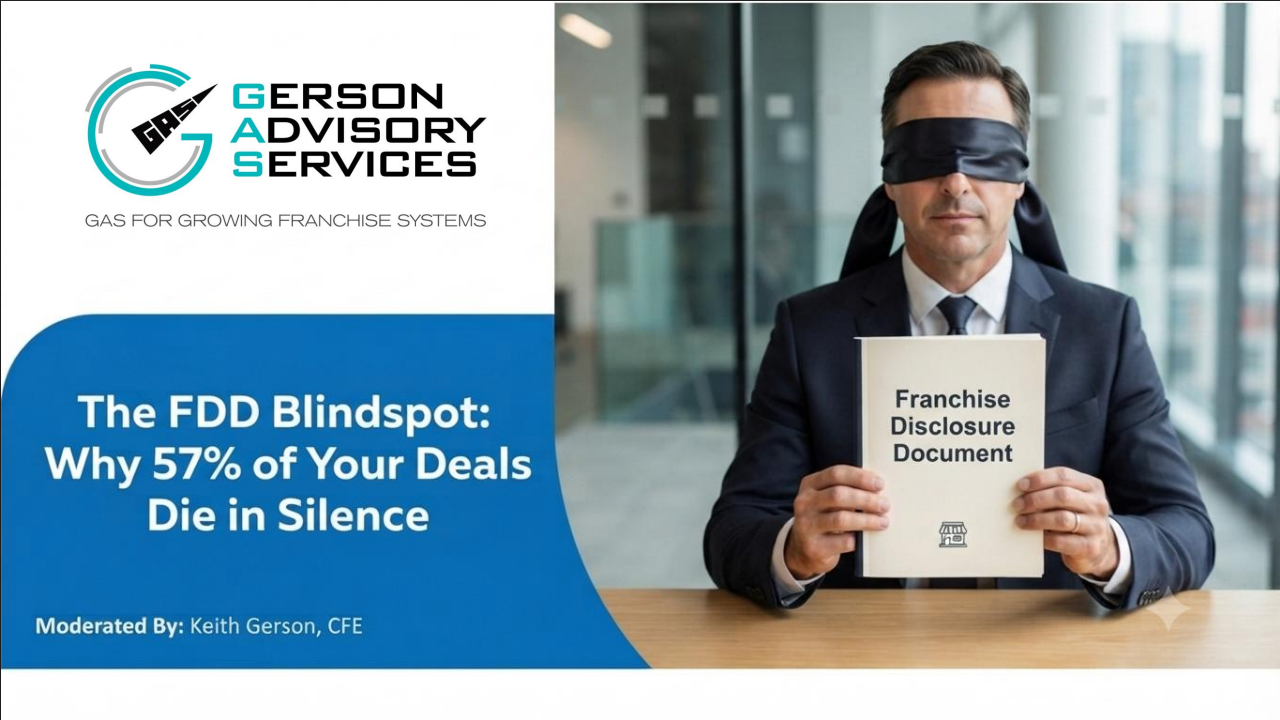
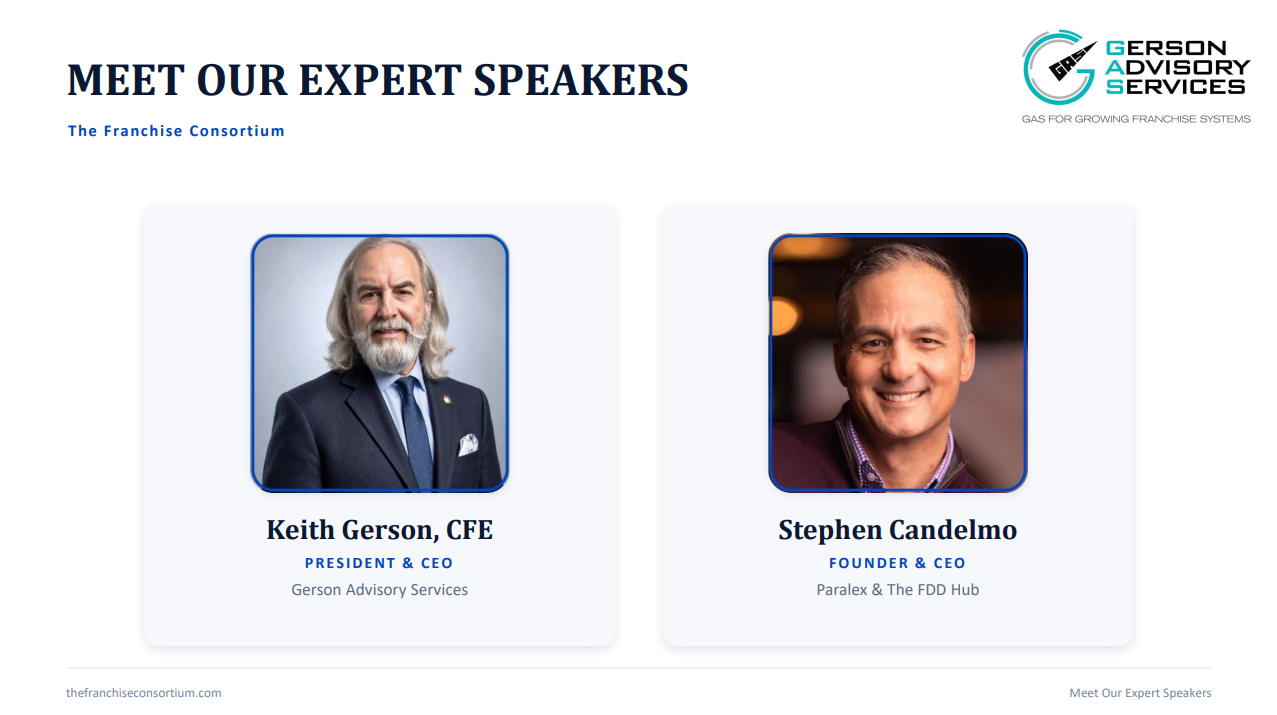
That was the central issue explored during a recent Franchise Sales Mastery webinar hosted by Keith Gerson of Gerson Advisory Services, featuring Stephan Candelmo, founder and CEO of Parallax and creator of FDD Hub.
The conversation revealed something much larger than an FDD problem. It exposed a candidate-experience problem, a measurement problem, and potentially one of the biggest opportunities for franchise development teams to improve their sales process.
The Middle of the Franchise Sales Funnel Has a Visibility Problem
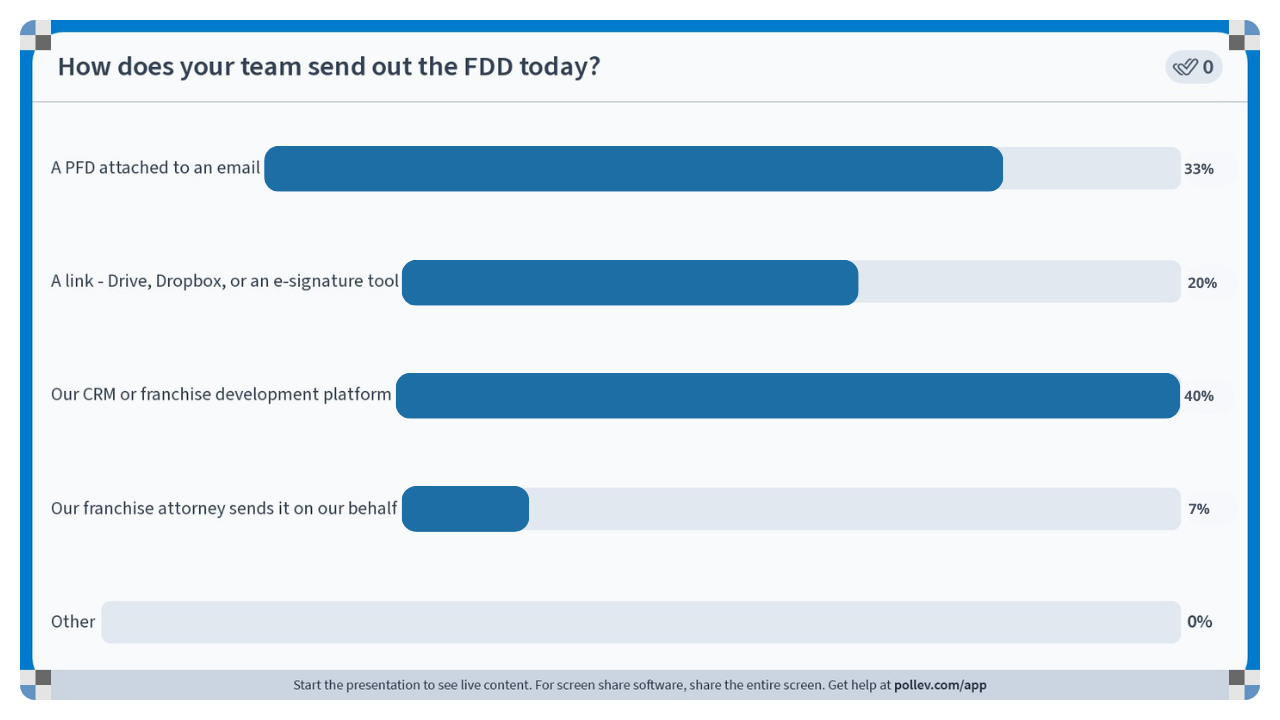
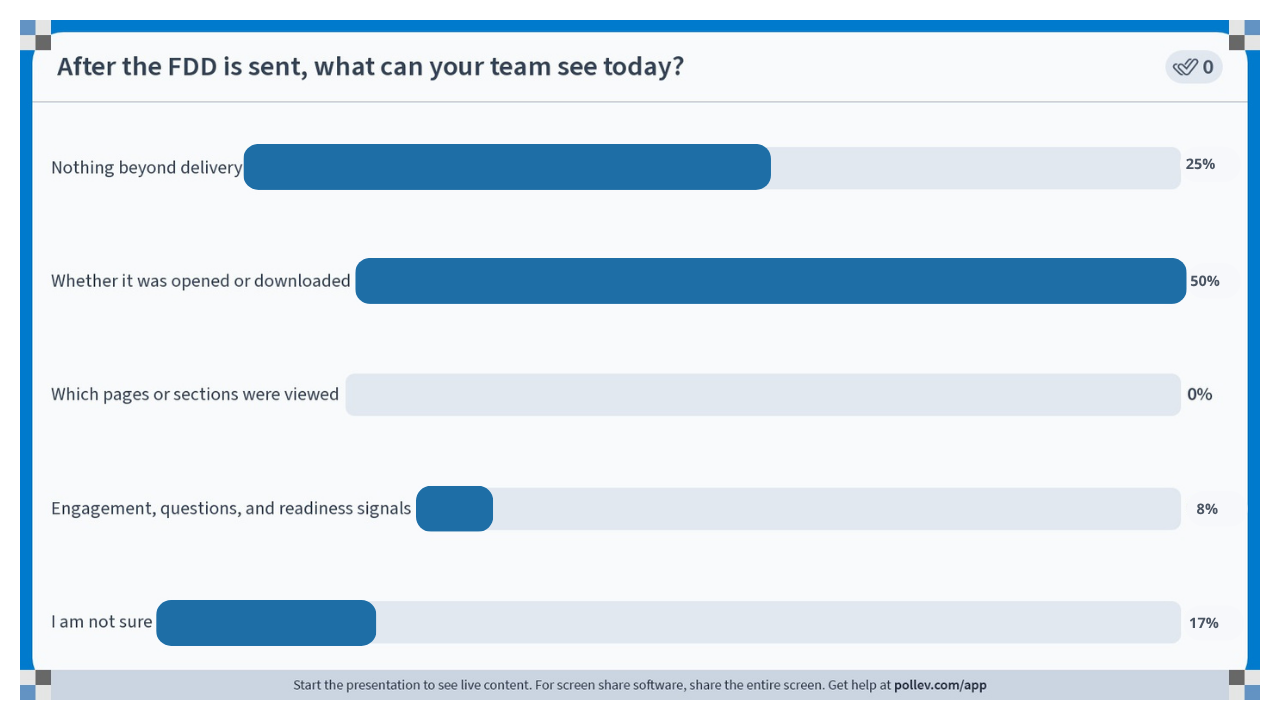
Most franchise development teams know whether an FDD was sent.
Some know whether the prospect opened or downloaded it.
But what happens after that?
Did the candidate understand what they were reading?
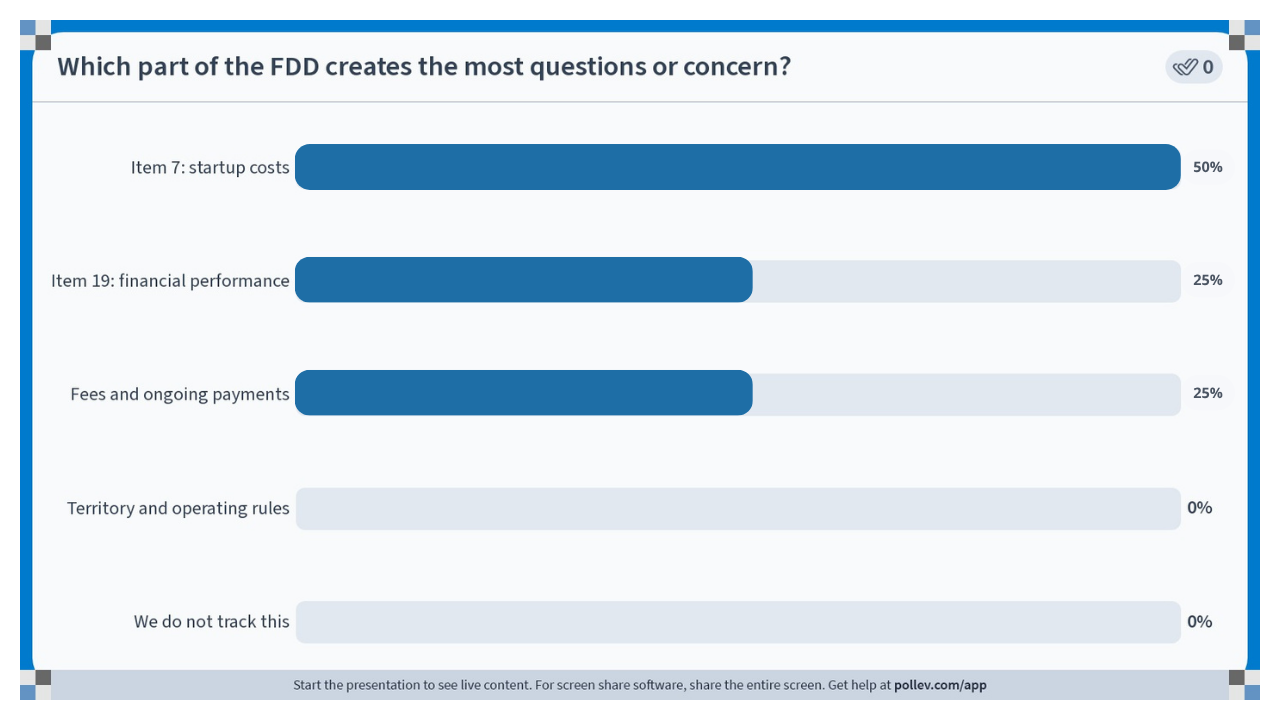
Did Item 7 raise concerns about the initial investment?
Did they spend time reviewing Item 19?
Did they become confused by fees, territory language, transfer provisions, or the franchise agreement?
Or did they simply stop engaging?
In many cases, the development team has no idea.
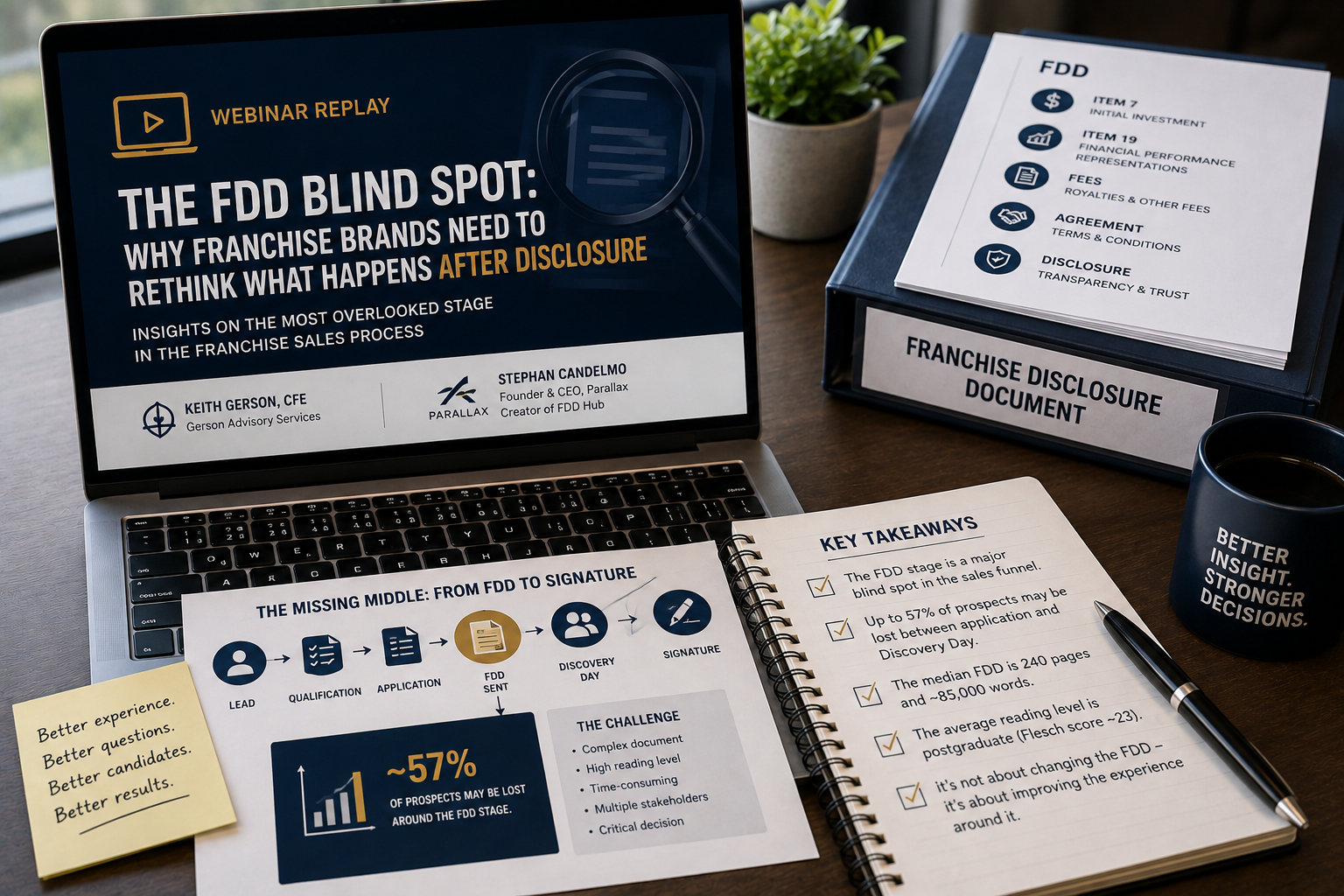
During the webinar, Candelmo described this portion of the funnel as a significant blind spot. He pointed to industry data suggesting that approximately 57% of prospects between the application and Discovery Day stages may be lost around the point where the FDD enters the process. He also noted that some brands report even higher drop-off rates.
That should raise an important question for every franchise development leader:
If a large percentage of prospects disappear during one stage of the process, why aren’t we measuring that stage more closely?
For decades, brands have largely accepted that candidates sometimes “go dark” after receiving the FDD.
Perhaps the more important question is not why candidates disappear.
It is why the industry has become comfortable not knowing.
We May Be Underestimating What We’re Asking Candidates to Do
The FDD is an essential consumer-protection and legal disclosure document.
But from the perspective of a prospective franchise owner, it can also be overwhelming.
Candelmo shared data gathered from analyzing thousands of FDDs that illustrates just how significant that challenge can be.
The median FDD is approximately 240 pages long, with an average word count approaching 85,000 words. Carefully reading a document of that size could require roughly 10 to 14 hours.
For perspective, Candelmo compared that word count to the length of the first Harry Potter novel.
But length is only part of the problem.
Using the Flesch Reading Ease scale, Candelmo said his company’s analysis of thousands of FDDs produced an average score of approximately 23, putting the material around a postgraduate or professional reading level.
Then consider the person receiving it.
That candidate may have a full-time job.
They may be evaluating multiple franchise opportunities.
They may be speaking with a spouse, financial advisor, lender, attorney, or accountant.
And they may be contemplating one of the largest financial decisions of their life.
Then an email arrives with a massive legal document attached and, too often, a message that essentially says:
“Here is the FDD. Let me know if you have any questions.”
From the franchisor’s perspective, disclosure has occurred.
From the candidate’s perspective, the hardest part of the evaluation process may have just begun.
That difference matters.
The FDD Doesn’t Necessarily Need to Become a Better Sales Document. It Needs a Better Sales Experience.
One of the strongest ideas from the webinar came during a discussion about whether the FDD should be considered a legal document, a marketing document, or both.
Candelmo reframed the question.
Instead of asking:
How do we make the FDD a better selling document?
Franchise brands may need to ask:
How do we create a better selling experience around the FDD?
That distinction is important.
The goal is not to water down disclosure or transform a legal document into a brochure.
The goal is to help candidates navigate a complicated evaluation process while maintaining the integrity and protections the document is designed to provide.
As Candelmo explained, changing the experience around the FDD can allow the legal protections to remain intact while giving brands an opportunity to communicate more effectively, answer better questions, build trust, and identify candidates who are genuinely aligned with the system.
Some franchise organizations are already attempting to address this.
Brands may conduct pre-FDD meetings explaining what candidates are about to receive. Others schedule post-disclosure conversations, group education sessions, or nurturing campaigns designed to guide candidates through the document.
Those practices point toward an important shift in franchise sales philosophy:
Disclosure should not be treated as a transaction. It should be treated as part of the candidate journey.
Engagement Can Tell You More Than “Opened” or “Downloaded”
Digital marketing teams would never accept an analytics platform that only told them whether someone received a webpage.
They want to know what happened next.
What did the visitor look at?
Where did they spend time?
What questions did they have?
What behavior demonstrated intent?
Franchise development should begin thinking the same way.
One of the more interesting examples discussed during the webinar involved a hypothetical candidate who spends 12 minutes reviewing Item 19, returns to Item 7 twice, and then stops.
That activity does not definitively tell a salesperson what the prospect thinks.
But it does provide context.
Item 19 addresses financial performance representations, while Item 7 outlines the estimated initial investment. A candidate repeatedly moving between those sections could reasonably be trying to understand the relationship between what the business may cost and its potential financial performance.
That insight changes the next conversation.
Instead of asking:
“Did you read the FDD?”
or:
“Do you have any questions?”
a development professional could begin a consultative conversation around investment, financial expectations, costs, and the candidate’s concerns.
That is the difference between simply possessing data and using it to create a better sales experience.
As Candelmo put it during the webinar, engagement can become a proxy for intent.
For franchise development teams, that may be one of the biggest opportunities hiding inside the FDD process.
Stop Asking Candidates If They “Did Their Homework”
Perhaps one of the simplest lessons from the webinar was also one of the most practical.
Candelmo advised against beginning a post-FDD conversation by asking:
“Did you have a chance to read it?”
He compared that to asking someone whether they completed their homework.
It immediately puts the candidate on the defensive.
Instead, the conversation should help the prospect work through the areas that matter most.
That may include:
- initial investment and ongoing fees,
- training and franchisee support,
- territory protections,
- continuing obligations,
- financial performance,
- transfer or termination provisions,
- and questions about the overall franchise system.
There is another important point here.
A candidate who does not have questions is not necessarily a candidate who fully understands the opportunity.
Sometimes the opposite may be true.
If someone has just received an 85,000-word legal document written at an advanced reading level, silence may not indicate confidence.
It may indicate uncertainty about what to ask.
Great franchise sales professionals do more than wait for questions.
They help candidates discover the questions they should be asking.
The Future of Franchise Sales May Be More Consultative, Not More Automated
Technology and AI played an important role in the webinar, but one of the larger lessons was not simply that franchise brands need more software.
They need better intelligence.
Technology can potentially reveal patterns in candidate behavior, surface areas of interest, and help development professionals personalize follow-up conversations.
But the objective should not be surveillance.
It should be understanding.
Candelmo specifically cautioned against overly granular tracking that could feel intrusive. The goal, he explained, is to use engagement signals to better understand and support a candidate evaluating what may be one of the largest investments of their life.
That distinction is essential.
The best application of AI in franchise development may not be replacing the salesperson.
It may be giving the salesperson enough context to become more human, more relevant, and more consultative.
Instead of sending seven versions of:
“Do you have any questions?”
the development professional can have a conversation that reflects what the candidate actually cares about.
That’s where technology becomes useful.
Three Things Franchise Development Teams Can Do Right Now
The webinar ended with a particularly valuable challenge: what can a franchise development team do before buying any new technology?
The answer begins with measurement.
First, determine how many FDDs were sent during the previous quarter and how many receipts were returned.
Next, identify how many of those disclosed candidates ultimately progressed to Discovery Day.
That establishes a baseline for the FDD stage of the funnel.
As Candelmo emphasized, you cannot improve what you have not measured.
Finally, evaluate your follow-up communication.
If the primary message candidates receive after disclosure is:
“Let me know if you have any questions,”
there is likely room for improvement.
Give candidates context.
Give them topics to consider.
Help them understand what deserves their attention.
Guide the evaluation without steering the conclusion.
The Bigger Opportunity
For years, franchise development teams have invested heavily in improving the top of the funnel.
More leads.
Better CRMs.
Stronger advertising.
More sophisticated qualification processes.
Better Discovery Days.
But improving franchise sales does not always require adding more prospects to the funnel.
Sometimes the bigger opportunity is understanding where the prospects you already have are getting stuck.
The FDD stage may be one of those places.
The document itself will remain detailed. It will remain legal. And it will continue to play a critical role in protecting both franchisors and prospective franchise owners.
What can change is the experience around it.
Franchise brands that begin measuring this stage, educating candidates through it, and using engagement intelligently may discover that one of the industry’s biggest sales opportunities has been sitting in the middle of the funnel all along.
The question is no longer simply whether your candidates received the FDD.
The better question is: What happened after they did?